A 175 W load and a 30-second continuity target defined the fleet standard
Independent service notice: This site is independently operated and is not affiliated with, endorsed by, or sponsored by the manufacturer. Product names and trademarks are the property of their respective owners.
CyberPower reports a national restaurant deployment built around a 175 W point-of-sale load, a 30-second ride-through requirement and the AVRG750U. Equipment record: CyberPower AVRG750U, companion identifier RB1270B. Decision: Select the AVRG750U for the documented 175 W POS load because its published battery-backed performance exceeds the 30-second transaction-continuity target, while verifying each outlet assignment before deployment.
Thirty seconds at the register
A restaurant terminal does not need the same autonomy as a server room. The immediate duty is to keep the register, display and payment path alive through a short interruption so a transaction can finish cleanly. CyberPower reports more than 12,000 locations and 16,000 units in the OEM deployment. Those fleet quantities support standardization, while the model page supplies the electrical limits used for an individual terminal.
For CyberPower AVRG750U, the applicability boundary is anchored to 750 VA, 450 W and part RB1270B. No worked input is added to these published points. The exact equipment record still requires confirmation at the installed unit.
Confirm availability and catalogue details for CyberPower AVRG750U or RB1270B on the CyberPower UPS systems page.
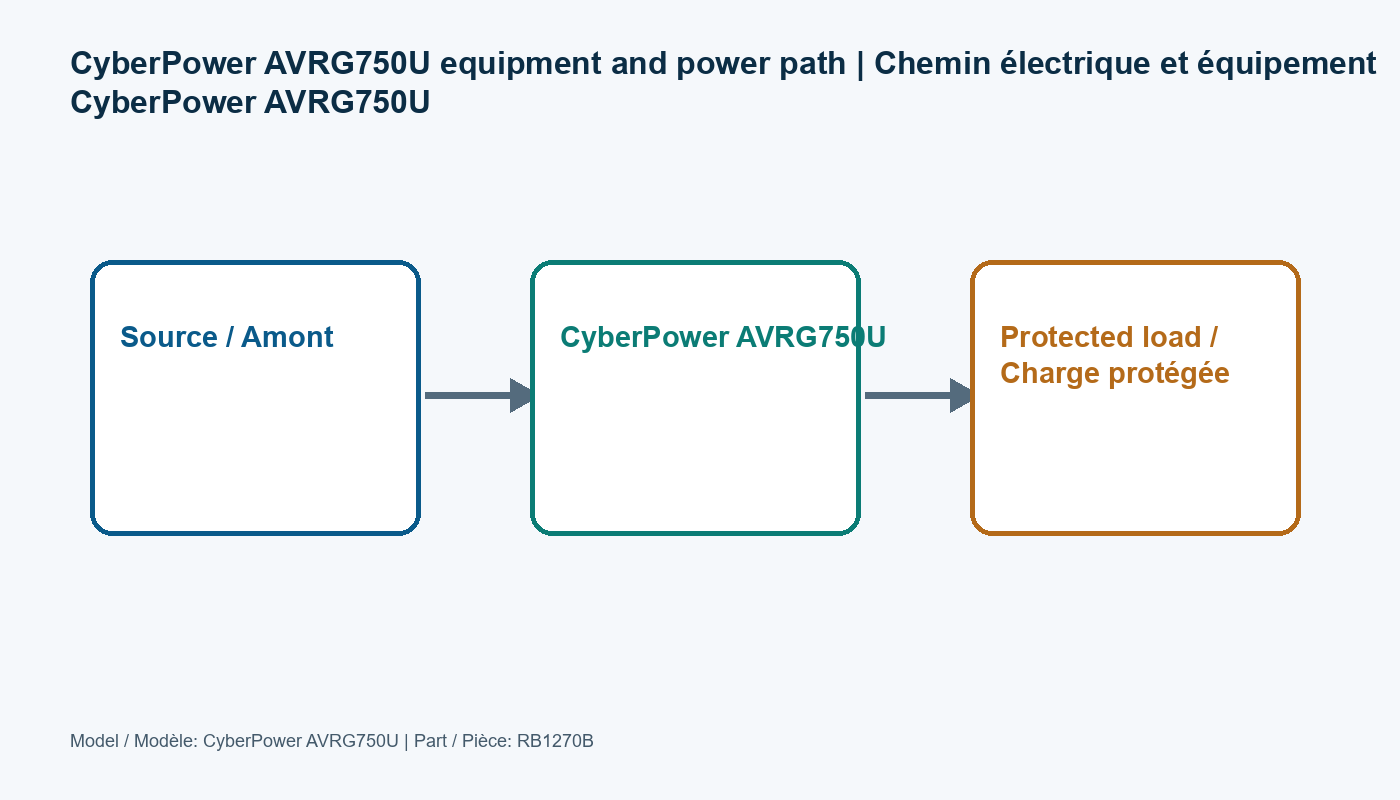
Figure 1. CyberPower AVRG750U equipment and power path
AVRG750U load and battery record
The controlling numerical record is: UPS apparent-power rating: 750 VA; UPS real-power rating: 450 W; Documented POS load: 175 W; Transaction continuity target: 30 s; Published full-load runtime: 2.5 min; Internal battery capacity: 7 Ah; Reported fleet quantity: 16000 UPS units. Each value has a defined source or assumption status in the engineering ledger. Values from different configurations are not combined as though they came from one installed system.
| Engineering parameter | Value | Evidence status |
|---|---|---|
| UPS apparent-power rating | 750 VA | Published OEM value |
| UPS real-power rating | 450 W | Published OEM value |
| Documented POS load | 175 W | Published OEM value |
| Transaction continuity target | 30 s | Published OEM value |
| Published full-load runtime | 2.5 min | Published OEM value |
| Internal battery capacity | 7 Ah | Published OEM value |
| Reported fleet quantity | 16000 UPS units | Published OEM value |
The 175 W terminal is 38.9 percent of the 450 W real-power rating. The published 2.5-minute runtime is measured at full load, not at 175 W, so it is a conservative operating point for the short target rather than a prediction of exact in-store autonomy. The RB1270B cross-reference also prevents a future battery order from being based only on a 12 V label.
Runtime margin above the POS target
The worked check uses load fraction = 175 W / 450 W; time margin = 150 s / 30 s. With a 175 W load, a 450 W rating, a 2.5-minute published full-load point and a 30-second target, the result is 38.9% load and 5.0 times the target duration. The published full-load point already exceeds the required interval by 120 seconds. The arithmetic is reproducible, but it remains a design check until the listed inputs are confirmed at the equipment.
The 38.9% load and 5.0 times the target duration result follows from load fraction = 175 W / 450 W; time margin = 150 s / 30 s. If the 450 W input changes, this check is repeated rather than carrying the earlier result into a different operating state.
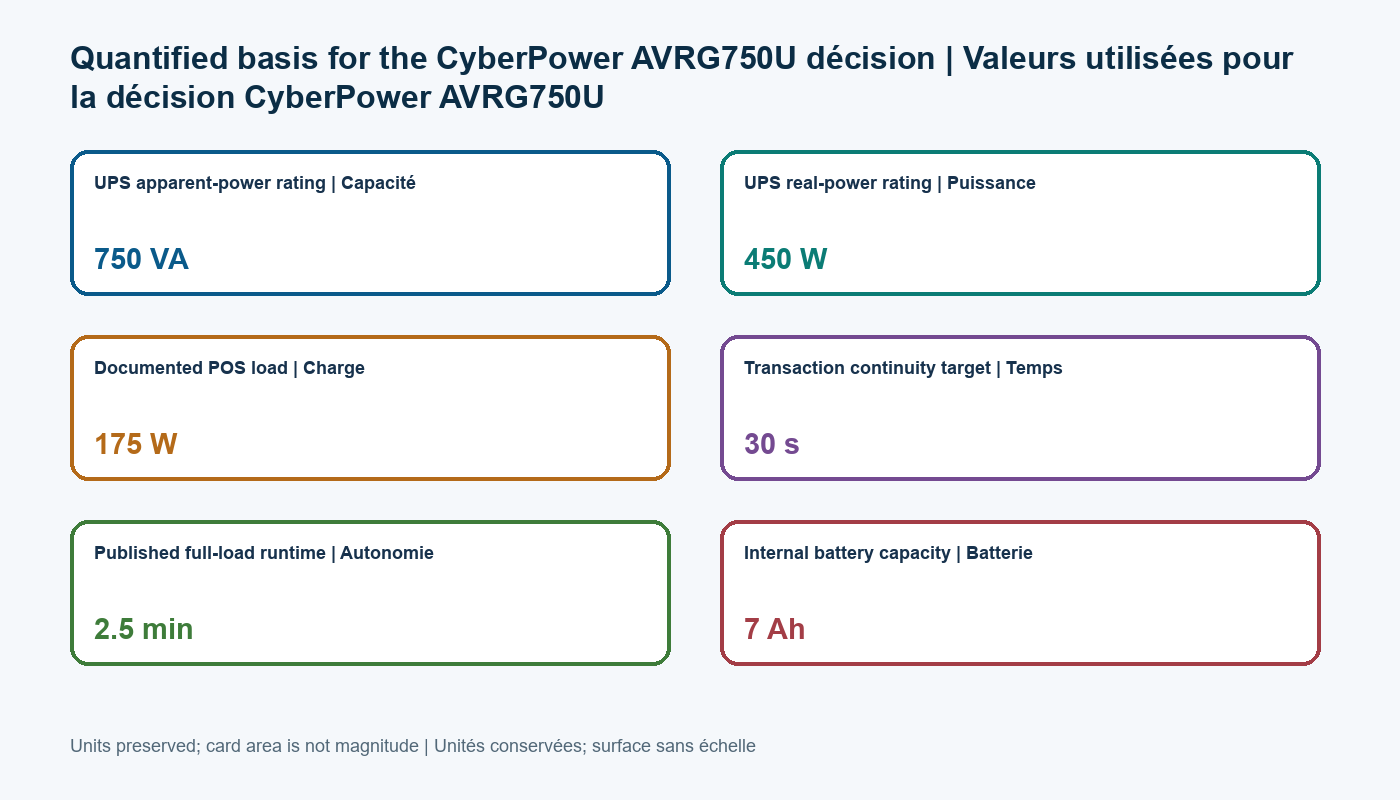
Figure 2. Quantified basis for the CyberPower AVRG750U decision
Why the battery-backed outlets controlled the selection
The selection depended on outlet mapping. The AVRG750U has surge-only and battery-backed receptacles; a terminal connected to the wrong group would remain exposed even when the UPS itself was correctly sized. The acceptance record therefore identifies the register, payment device and network dependency connected to battery-backed outlets.
Four-millisecond transfer performance is suitable for typical electronic POS power supplies, but the store check still observes an actual input interruption. The result is pass or fail at the connected terminal, not an assumption derived from the UPS label. A reboot, payment-session loss or network drop remains a failed acceptance result.
Fleet standardization reduces battery and training variation only while the connected load stays inside the documented envelope. Added displays, printers or network equipment require a new watt measurement. The 750 VA name alone cannot establish the new runtime.
| Path | Technical consequence | Disposition |
|---|---|---|
| Apply the stated engineering decision | Select the AVRG750U for the documented 175 W POS load because its published battery-backed performance exceeds the 30-second transaction-continuity target, while verifying each outlet assignment before deployment. | Selected basis |
| Generic model substitution | Select by family name or rating alone, without confirming the exact configuration. | Not selected on the stated evidence |
| Unverified operating assumption | Treat a design assumption as though it were a site measurement. | Reconsider only if the input changes |
UPS preventive maintenance across Canada covers field measurements and service work for CyberPower AVRG750U.
The CyberPower AVRG750U decision retains part RB1270B, the 38.9% load and 5.0 times the target duration calculation result and the manufacturer-published 750 VA point in one equipment record. Applicable OEM instructions, qualified electrical authority and the installed single-line or wiring record remain controlling for any executable work.
Store-level acceptance checks
Acceptance of CyberPower AVRG750U depends on five recorded checks:
- Confirm AVRG750U and RB1270B identifiers at the store.
- Measure the combined POS load and confirm it remains below 450 W.
- Map the terminal and payment device to battery-backed receptacles.
- Interrupt input under an approved test and observe at least 30 seconds of stable operation.
- Record any reboot, transaction loss, alarm or added peripheral before accepting the site.
The CyberPower AVRG750U record is not accepted if part RB1270B does not match, the calculation does not reproduce 38.9% load and 5.0 times the target duration, or the final operating state is not recorded. The equipment returns to the approved safe state when a check stops, and the unresolved condition remains open without an invented repair result.
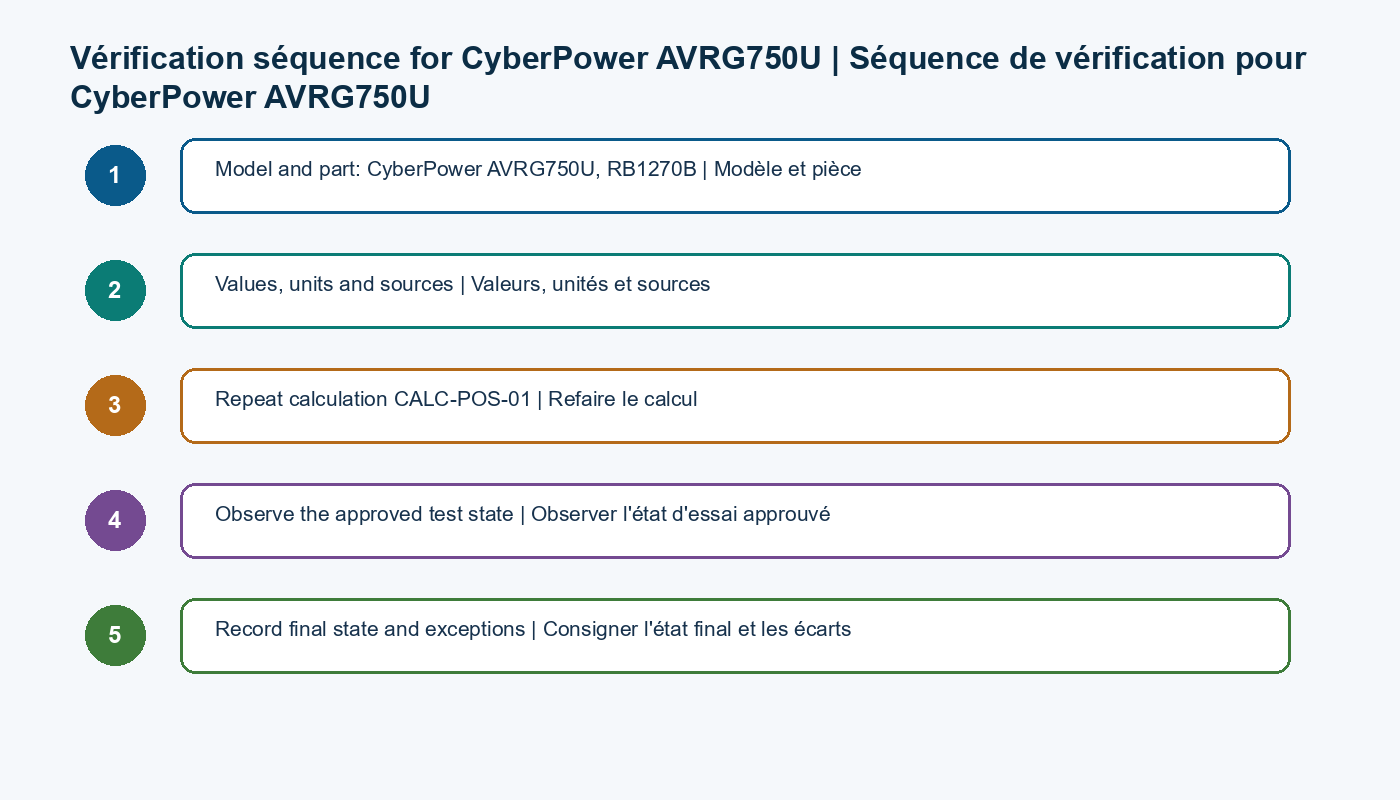
Figure 3. Verification sequence for CyberPower AVRG750U
A narrow standard for one POS load
The OEM operating point supports the AVRG750U as a short ride-through standard for the documented 175 W terminal. The conclusion does not extend to kitchen loads, refrigeration, printers added later or terminals whose network path is not protected.
Decision rule: Select the AVRG750U for the documented 175 W POS load because its published battery-backed performance exceeds the 30-second transaction-continuity target, while verifying each outlet assignment before deployment. A different model, load, voltage, battery string, software version or operating state requires a new check against the applicable manufacturer record.
Sources
- CyberPower AVRG750U product page
- CyberPower national restaurant point-of-sale case study
- Internal engineering reference: UPS Solutions & Quotes/UPS Sizing and Solution Design.md
- our service network, anonymized field-case library, used only where the text identifies a retained field fact.